THE JOURNEY YOU WILL NOT FINISH
What if finishing was never your assignment?
By Francis E. Madojemu
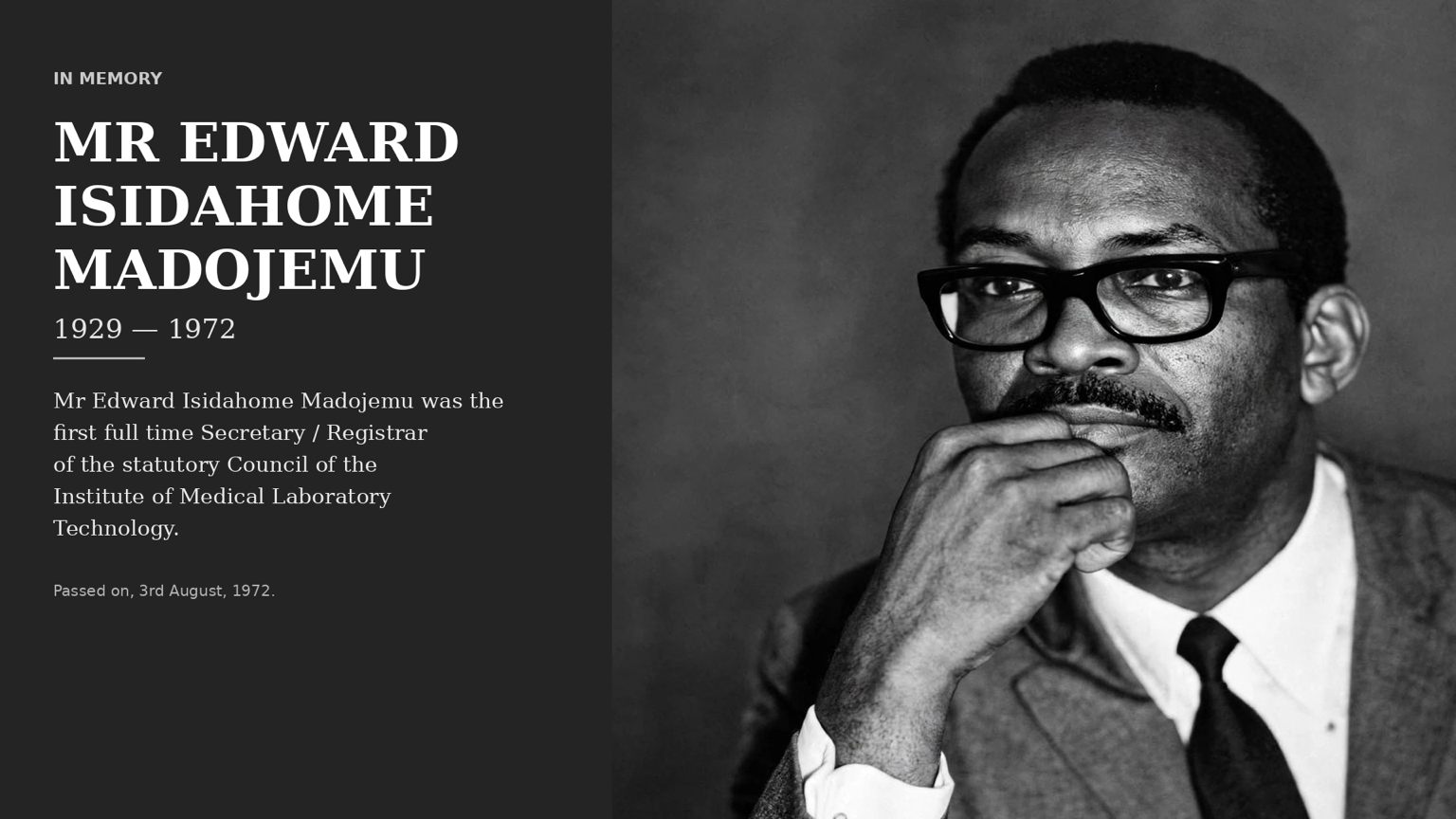
I lost my father when I was ten years old.
He was a good man.
Ten is young enough to know that something enormous has disappeared, but perhaps too young to understand everything that disappearance will eventually mean.
Many years later, I still discover him in unexpected places.
Recently, I was looking through old photographs of my father and noticed the way he sometimes raised his hand towards his face.
I do exactly the same thing.
Ok It is such a small thing that it would be easy to dismiss. A gesture. A mannerism. Something almost inconsequential.
But I have also recognised attributes of his character in myself.
He died when I was ten.
And yet, somehow, something travelled.
THE QUESTION I COULD NOT ANSWER
When I was still in school, I became friends with a classmate who invited me to his home.
There was something in that house that I no longer had in mine.
A father.
My mother was alive. She was a hardworking businesswoman raising us as a single mother, doing what she knew to do. But there were questions a young boy sometimes wanted to ask a father, and mine was no longer there.
So I asked my friend’s father one.
It wasn’t complicated.
It was simply this:
What is all this for?
We are born.
We grow up.
We go to school.
We struggle.
We marry.
We have children.
Then we spend much of our lives working, sacrificing and struggling to give those children an education and, hopefully, a better life.
And then they grow up.
They marry.
They have children.
And they begin working, sacrificing and struggling to give their children an education and a better life.
Then their children do it.
And theirs.
And theirs.
Why?
If life is simply one generation struggling to produce another generation that will struggle to produce another generation, something about the whole arrangement seemed terribly unsatisfactory to me.
I carried that question for years.
Then I encountered a butterfly.
FOUR GENERATIONS TO HOME
In 2024, at the Bethel Leaders Summit, Bill Johnson used the migration of the monarch butterfly to talk about multigenerational purpose.
He said:
“It takes a monarch butterfly four generations to migrate. What we’re doing can’t be accomplished in one generation. We won’t be able to go where we want to go in one generation. We have to create the momentum, the vision and the resources for the next generation.”
His point was larger than butterflies.
What are we building that cannot be completed by us?
What must fathers and mothers place into sons and daughters?
What would it mean to have a hundred-year vision rather than an imagination limited to our own lifetime?
That picture stayed with me.
I subsequently used the monarch in presentations of my own.
Then, on September 1, 2026, I encountered the story again in a CREATION Life devotional appropriately titled Four Generations to Home.
This time something different arrested me.
I stopped thinking only about the butterflies.
I started thinking about the people who had spent decades trying to understand them.
Who gives that much of a lifetime to following a butterfly?
And why?
That question took me backwards almost ninety years.
TORONTO, 1937
Fred Urquhart had been fascinated by monarch butterflies since he was young.
One question refused to leave him:
Where do they go?
Each autumn, monarchs disappeared from Canada and the northern United States.
But where?
In 1937, Urquhart began experiments that would eventually help answer the question.
Imagine the problem.
No GPS.
No satellite tracking.
No miniature electronic transmitters.
Just a fragile insect weighing less than a gram, disappearing across a continent.
How do you follow it?
Fred and his wife and research partner, Norah Urquhart, eventually developed methods for tagging monarchs with tiny labels light enough for the butterflies to continue flying.
But solving the tagging problem created another problem.
Two people could not possibly tag enough butterflies across an entire continent to reveal a continental migration.
So Fred and Norah did something profound.
They distributed the question.
They recruited volunteers.
Teachers.
Students.
Families.
Naturalists.
Butterfly enthusiasts.
Eventually thousands of people across North America participated.
They caught monarchs.
Tagged them.
Released them.
Reported what they found.
The Urquharts accumulated the information.
A butterfly here.
Another there.
Another farther south.
One tag.
One observation.
One letter.
One pin on a map.
Most individual actions were almost meaningless by themselves.
Together, they began revealing something no individual observer could see.
The discovery required a network.
THE TRAIL WENT SOUTH
Evidence increasingly pointed south.
Through the United States.
Through Texas.
Towards Mexico.
The Urquharts themselves spent enormous amounts of time and energy pursuing the trail, including thousands of kilometres of searching in the southern United States.
Still, the mystery remained.
The butterflies seemed to pass through Texas.
But where were they going?
Eventually the search extended into Mexico.
An American living there, Kenneth Brugger, became involved. He was later joined in the field search by Catalina Aguado, then known as Cathy Brugger and today Catalina Trail.
They searched the mountains of central Mexico.
And searched.
Until, in January 1975, the search reached the extraordinary monarch colonies in the highlands of central Mexico.
Millions of butterflies.
Trees covered with them.
The forest seemingly alive with orange and black.
The long scientific mystery was finally yielding its answer.
The Urquharts travelled to Mexico the following winter.
Fred was then in his sixties.
After decades of questions, tags, correspondence, maps, volunteers, searching and waiting, he finally stood among the monarchs whose disappearance had fascinated him for so much of his life.
Think about that.
Almost four decades devoted to a question.
BUT THE STORY DESERVES TO BE TOLD PROPERLY
There is an important qualification.
The people living in those Mexican mountains already knew that monarchs gathered there.
Scientists did not “discover” butterflies that no human being had previously seen.
Local knowledge existed before the scientific mystery was solved.
What the extraordinary Urquhart research network, Brugger, Aguado and many others helped establish was the connection between those overwintering colonies in Mexico and the vast migration of monarchs across North America.
That distinction matters.
So does another.
This cannot properly be told merely as the story of Fred Urquhart.
Norah Urquhart was a research partner.
She helped build and sustain the tagging network and correspond with participants.
Catalina Aguado’s contribution also deserves to be named rather than disappearing behind Kenneth Brugger.
Thousands of volunteers deserve their place too.
And the local people whose knowledge of those forests preceded the scientific search should not be erased from the account.
The story becomes better when everybody is allowed back into it.
Because, strangely enough, that is also the lesson of the butterflies.
Nobody carried the whole story alone.
THE BUTTERFLY DIES. THE JOURNEY DOESN’T.
Bill Johnson’s phrase about four generations is a wonderfully memorable picture.
The underlying science is slightly more nuanced.
The eastern North American monarch’s annual migration is genuinely multigenerational, although the exact number of generations can vary with geography and conditions.
Successive generations move northward during spring and summer.
Those butterflies live relatively short lives.
Then something remarkable happens.
Towards the end of summer, another generation emerges.
But this generation is different.
Instead of immediately reproducing, these monarchs enter a reproductive pause and live dramatically longer.
And they fly south.
Some travel thousands of kilometres towards central Mexico.
The monarchs that originally left Mexico months earlier are long gone.
Several generations have lived since then.
Yet this new generation turns south towards a place it has never seen.
Scientists continue to study how they accomplish this astonishing feat. Research has demonstrated mechanisms including a time-compensated sun compass, circadian clocks associated with the antennae, and the ability to use magnetic information under certain conditions.
The biology is extraordinary.
But so is the picture.
The generation that flies towards home has never been home before.
Something has survived the generations.
Direction.
MAYBE WE HAVE MISUNDERSTOOD INHERITANCE
We normally think of inheritance as something received when somebody dies.
Money.
Land.
A house.
Shares.
Possessions.
But perhaps inheritance is much larger.
What if inheritance is also direction?
Character.
Faith.
Wisdom.
Competence.
Stories.
Values.
Relationships.
Knowledge.
Institutions.
Systems.
Mistakes we teach another generation not to repeat.
Questions we answer so that they can begin with better questions.
What if the purpose of inheritance is not merely to leave the next generation something to possess, but something with which to continue?
That changes the question I asked as a young man.
Maybe parents are not simply struggling so their children can grow up and struggle for another set of children.
Maybe generations are not supposed to travel endlessly around a circle.
Maybe generations are travelling along a road.
A circle keeps returning to the same place.
A journey progresses.
My children should not have to begin exactly where I began.
Wherever possible, they should begin from somewhere I helped them reach.
And their children should begin farther still.
Every generation should not have to start again.
THE TRAGEDY OF GENERATIONAL AMNESIA
Perhaps one of the greatest problems facing families, organisations, churches and nations is not simply a shortage of resources.
It is a shortage of transmission.
We keep starting again.
A founder builds a company and everything collapses when the founder leaves.
A pastor builds a church that cannot function without his personality.
A government abandons useful projects because another administration began them.
Families accumulate experience but fail to turn that experience into wisdom for their children.
Institutions repeat mistakes because nobody preserved the memory.
Countries keep returning to kilometre zero.
This is not generational progress.
It is generational amnesia.
The monarch does not restart the migration.
It continues it.
Bill Johnson’s three words therefore become important:
MOMENTUM. VISION. RESOURCES.
If I cannot complete the journey, perhaps my responsibility is to create enough momentum for someone else to continue; enough vision for them to understand where we are going; and enough resources so they do not have to return unnecessarily to the beginning.
I would add one more:
DIRECTION.
Because resources without direction can simply be consumed.
THE NEXT ELECTION OR THE NEXT GENERATION?
In 1870, American theologian James Freeman Clarke made a distinction that has survived for more than 150 years:
“A politician…thinks of the next election; while the statesman thinks of the next generation.”
There is an entire philosophy of nation-building inside that sentence.
Elections matter.
Accountability matters.
Immediate needs matter.
People who are hungry today cannot be fed with promises about 2075.
But a nation whose imagination extends only to the next election will repeatedly sacrifice its future to its present.
What happens when leaders begin asking:
What are we building that may take fifty years?
What educational reforms will reveal their greatest fruit after today’s minister is forgotten?
What infrastructure, research institutions, industrial capabilities and cultural institutions must be built across administrations?
What kind of citizens are we forming?
What trees must we plant beneath whose shade we will never sit?
And what would happen if Nigeria began thinking not simply in four-year or eight-year political cycles, but in generations?
Some things are too important to be measured by the lifespan of the person who begins them.
WHAT IF I DON’T GET TO SEE IT?
This may be the harder question.
We like completion.
Start it.
Build it.
Finish it.
Win.
Receive the award.
Cut the ribbon.
Write the memoir.
Stand beside the monument.
We want to begin the work and live long enough to receive the applause for finishing it.
But some of the greatest work human beings can undertake cannot fit inside a human lifetime.
The Urquharts themselves demonstrate this.
A question that fascinated Fred as a young man became decades of research.
Thousands of volunteers participated without ever climbing that Mexican mountain.
Most individual tags did not solve the mystery.
Most participants could never say:
I found the monarchs.
Yet without thousands of apparently insignificant contributions, the larger picture could not have emerged.
That suggests another definition of significance.
Significance is not the same thing as visibility.
And significance is not the same thing as completion.
Sometimes significance means carrying a tiny piece of an enormous question faithfully.
SCRIPTURE HAS BEEN TELLING US THIS ALL ALONG
The monarch does not create our theology.
It gives the theology a picture.
God speaks to Abraham about generations he will never live to see.
Moses leads Israel towards a land he will not enter.
Then God says to Joshua:
“Moses My servant is dead. Now therefore, arise, go over this Jordan…”
Moses’ death does not cancel the journey.
Joshua continues it.
David wants to build the Temple.
God says no.
So David gathers resources.
Solomon builds.
David does not say:
If I cannot finish it, I will contribute nothing.
He prepares for something another generation will complete.
Paul later gives us another wonderfully simple description:
“I planted, Apollos watered, but God gave the increase.”
Different people.
Different assignments.
One work.
Psalm 145 says:
“One generation shall praise Your works to another, and shall declare Your mighty acts.”
Psalm 78 goes farther. God’s works are to be told to the coming generation so that even children yet unborn will arise and tell them to their children.
And then Acts gives us perhaps one of the most liberating descriptions of a completed life:
“For David, after he had served his own generation by the will of God, fell asleep…”
Notice what Scripture does not say.
David served every generation.
He didn’t.
He served his.
Maybe that is enough.
JESUS WAS ONLY IN HIS THIRTIES
This matters to me.
We cling to life partly because we unconsciously assume that significance requires longevity.
Long life is a gift.
Scripture celebrates it.
Death is not trivial. Paul calls death an enemy. Jesus wept at Lazarus’ tomb.
But Christianity does not permit us to equate a short life with an insignificant one.
Jesus’ earthly life ended in His early thirties.
The apostles died.
Paul died.
Peter died.
Generation after generation of Christians has died.
And yet here we are.
More than two thousand years later.
The Kingdom continues advancing.
Of course, Jesus is not merely another example of a leader whose influence survived Him.
The Christian claim is infinitely greater.
He rose from the dead.
Death itself does not get the final word.
So the monarch can teach us something about generations.
But Christ tells us what to believe about death.
That distinction matters.
For the Christian, the answer to mortality is not simply:
At least my influence will continue.
Our hope is resurrection.
Eternity.
Christ.
And perhaps that resurrection hope should also free us from the desperate belief that every purpose of God entrusted to us must somehow be squeezed into the few decades of our biological lives.
MY FATHER DID NOT GET TO SEE ALL OF THIS
Which brings me back to my father.
He died when I was ten.
I wish he had lived longer.
I wish I had known him as an adult.
There are conversations we never had.
Questions I never got to ask.
Things he never saw.
Death creates genuine absences, and faith does not require us to pretend otherwise.
But now, more than half a century later, I look at his photograph.
I see his hand.
And then I see mine.
Something travelled.
Perhaps much more travelled than I know.
His lifetime ended.
But the significance of his life did not necessarily end at the boundary of his lifetime.
I picked up some things.
I have carried them farther.
My children will carry some things farther still.
And suddenly the question I asked another boy’s father many years ago looks different.
Maybe this isn’t an endless circle of birth, struggle, children and death.
Maybe we are travelling.
Not around a circle.
Along a road.
THE RESEARCHERS NEVER KNEW I WOULD READ THEIR STORY
This may be the part of the monarch story that moves me most now.
Fred and Norah Urquhart wanted to know where butterflies went.
Kenneth Brugger and Catalina Aguado climbed mountains looking for them.
Thousands of volunteers placed tiny tags on fragile wings.
They were trying to answer a scientific question.
They could not possibly have known everywhere the answer itself would eventually travel.
They discovered where the monarchs went.
They could never have known where their discovery would go.
It travelled into scientific literature.
Into conservation.
Into classrooms.
Into books.
Into documentaries.
Decades later, Bill Johnson encountered the story and used it to challenge leaders to think beyond one generation.
I heard him.
The idea entered my own teaching and presentations.
Then another article caused me to turn around and look at the researchers themselves.
And now I am writing this.
Somebody I will never meet may read it.
Perhaps that person will carry the thought somewhere I will never go.
Do you see it?
The story itself is behaving like the story.
Someone discovers.
Someone records.
Someone tells.
Someone hears.
Someone carries it farther.
PERHAPS LEGACY IS THE WRONG WORD
I wonder sometimes whether our language of legacy has become too self-conscious.
What will people say about me?
Will my name survive?
Will they remember what I built?
Will there be a building named after me?
But the monarch does not need the next generation to remember it.
It needs the next generation to continue the journey.
That is different.
Perhaps the greatest evidence of successful leadership is not that everybody still remembers the founder.
Perhaps it is that the purpose continues when the founder is no longer required.
Perhaps successful parenting is not producing children who spend their lives celebrating their parents.
It is forming people capable of travelling farther.
Perhaps nation-building is not constructing monuments to administrations.
It is building institutions that outlive them.
Perhaps Kingdom leadership is not gathering people around our personal importance.
It is carrying the purposes of God faithfully through our generation and handing them forward.
WHAT ARE YOU CARRYING?
So perhaps the great question is not:
What will you leave behind?
Perhaps it is:
WHAT ARE YOU CARRYING FORWARD?
What did you receive?
What must you repair?
What must you refuse to transmit?
What must you strengthen?
What must you discover?
What must you build?
What must you teach?
What must you document so another generation does not have to rediscover it?
What momentum must you create?
What vision must you clarify?
What resources must you preserve?
What direction must you pass forward?
And what are you willing to begin knowing that you may never personally see it finished?
FOUR GENERATIONS TO HOME
Somewhere in North America, a monarch lifts from a milkweed plant.
It does not possess the whole journey.
It doesn’t need to.
One generation travels.
Another follows.
Another carries the story farther.
Eventually a generation turns south.
Ahead are thousands of kilometres.
Weather.
Wind.
Mountains.
Danger.
And somewhere in central Mexico, high in an oyamel forest, is a destination that butterfly has never seen.
Yet it flies.
Perhaps one of the great mistakes of our age is that we have confused significance with completion.
We want to start the work.
Finish the work.
Receive the applause.
And live long enough to see the monument.
But Moses does not enter every promised land.
David does not build every temple.
Paul does not see every seed become a church.
Researchers do not know everywhere their discoveries will travel.
Parents do not live to see everything their grandchildren will become.
Statesmen build for citizens who have not yet been born.
And sometimes a ten-year-old boy loses his father, only to discover many decades later that something of his father has been travelling with him all along.
No individual possesses the whole journey.
Each generation receives something.
Each generation carries something.
Each generation adds something.
And each generation must eventually hand something forward.
**RECEIVE.
CARRY.
ADD.
HAND FORWARD.**
Maybe that is how generations move.
Maybe that is how families become stronger.
Maybe that is how institutions survive founders.
Maybe that is how nations are built.
Maybe that is how the Kingdom moves from generation to generation.
Our responsibility is not to finish everything.
Our responsibility is to discern what part of the journey has been entrusted to us — and carry it faithfully far enough for another generation to take flight.
The butterfly dies. The journey doesn’t.
And for those whose hope is in Christ, even that is not the end of the story.
There is resurrection.
There is eternity.
There is home.
FOLLOW THE JOURNEY
Sources, attribution and further reading
My first encounter with the monarch as an explicit picture of multigenerational Kingdom purpose came through Bill Johnson’s Session 1 message at the Bethel Leaders Summit 2024. His language about creating “momentum, vision and resources for the next generation” prompted my earlier teaching and presentations. Watch Bill Johnson — Bethel Leaders Summit 2024, Session 1
The more recent catalyst for this article was CREATION Life’s September 1, 2026 devotional, “Four Generations to Home.” It caused me to return to the story and, particularly, to ask about the people who sacrificed years pursuing the scientific mystery. Read CREATION Life — Four Generations to Home

For the history of Fred and Norah Urquhart, the University of Toronto preserves the Frederick A. Urquhart archival collection, including records associated with the monarch research. University of Toronto Archives — Frederick A. Urquhart fonds

The Smithsonian also provides an accessible account of the Urquharts’ tagging work and the eventual connection with the Mexican overwintering sites. Smithsonian — Monarch Migration and the Urquhart Research


For contemporary information on monarch migration and the continuing tagging tradition, see Monarch Joint Venture and Monarch Watch. Monarch Joint Venture — Tracking the Migration Monarch Watch — Tagging Program


For the scientific work on monarch navigation—including the role of circadian timing, the sun compass and magnetic orientation—see the published scientific literature. U.S. National Library of Medicine — Monarch Navigation Research Nature Communications — A Magnetic Compass Aids Monarch Butterfly Migration

The U.S. Department of Agriculture and Forest Service also provide useful explanations of the multigenerational annual migration and the unusually long-lived southbound generation. USDA — Monarch Butterflies
Historical acknowledgement: the overwintering colonies were known to people living in central Mexico before their scientific connection to the North American migration was established. Kenneth Brugger and Catalina Aguado/Trail played crucial roles in the field search, while Fred and Norah Urquhart and their large volunteer network built the decades-long tagging programme. The achievement is best understood as a story involving many people rather than a single heroic “discoverer.”
Scripture references: Genesis 12–17; Joshua 1:1–2; 1 Chronicles 28–29; Psalm 78:4–7; Psalm 145:4; 1 Corinthians 3:6–7; Acts 13:36; Hebrews 11; John 11; 1 Corinthians 15.
Francis E. Madojemu
September 2026
FOUR GENERATIONS TO HOME
The Journey You Will Not Finish